
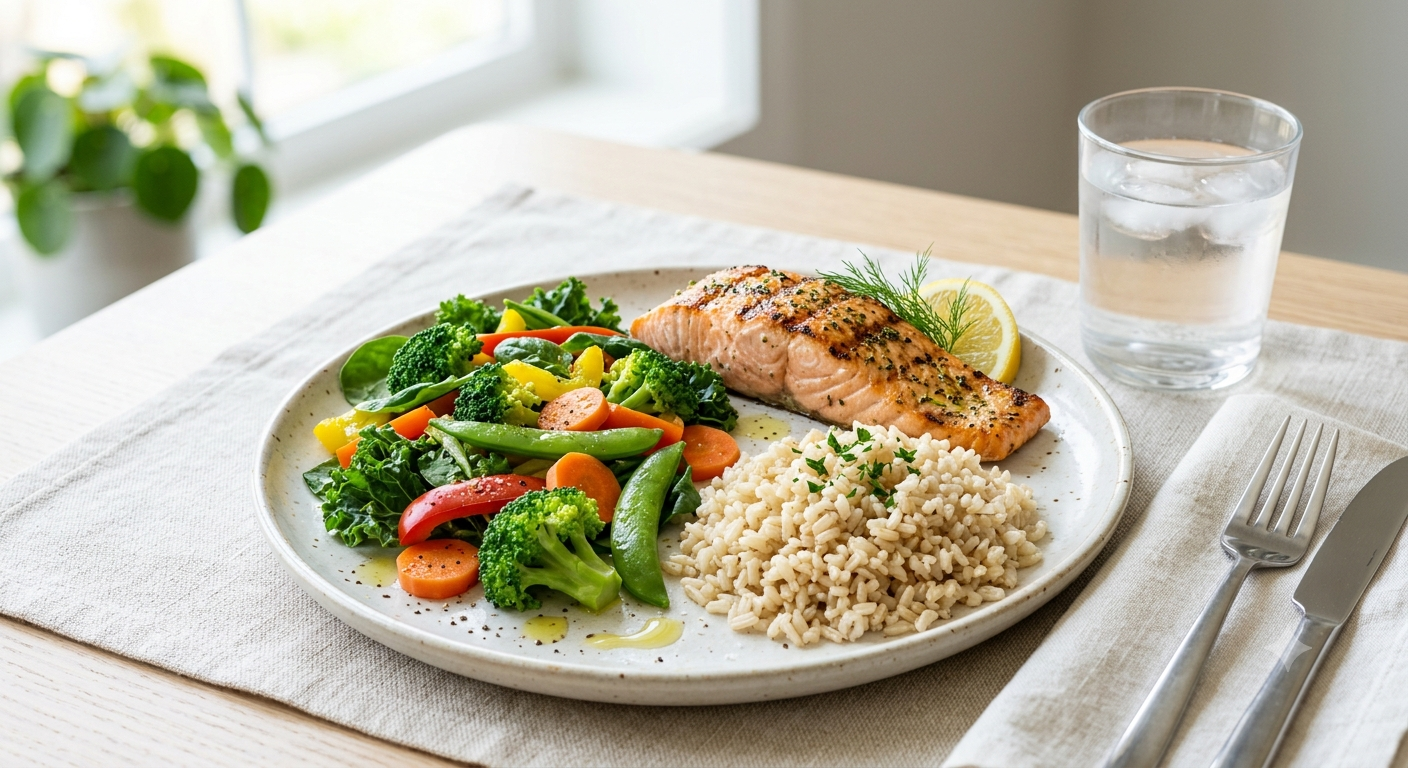
Learn how to control diabetes through proper nutrition. Complete guide with foods, practical tips, and scientific strategies to regulate blood sugar levels.
Introduction
You’ve been diagnosed with diabetes and heard it all: “Cut out sugar”, “Eat only salad”, “Your life is over”. None of that is true.
The reality is that controlling diabetes through nutrition is completely possible — and it doesn’t have to be complicated or boring. The secret is understanding how foods affect your body, not following restrictive diets that nobody can maintain.
In this guide, we’ll explore the science behind diabetic nutrition, identify which foods really help regulate blood sugar, and create a practical plan you can follow every day. If you have type 2 diabetes (or are pre-diabetic), this post is for you.
1. Why Nutrition is So Important for Diabetics
Nutrition is your greatest ally in managing diabetes. While medications help, they don’t do the job alone.
When you eat, your body breaks down food into sugar (glucose) that enters your bloodstream. In people with diabetes, this process becomes uncontrolled — the pancreas doesn’t produce enough insulin, or your body can’t use it properly. Result: high blood sugar that damages organs and blood vessels.
Here’s the crucial point: you control what goes into your body. By choosing the right foods, you reduce blood sugar spikes, improve your insulin resistance, and may even reduce your need for medications (always under medical supervision, of course).
Studies show that people with type 2 diabetes who change their diet can:
- Reduce blood sugar levels by up to 30%
- Lose weight (which helps even more)
- Decrease inflammation in the body
- Improve energy and mood
Nutrition isn’t an alternative treatment — it’s the foundation of diabetes management.
2. Foods That Control Blood Sugar
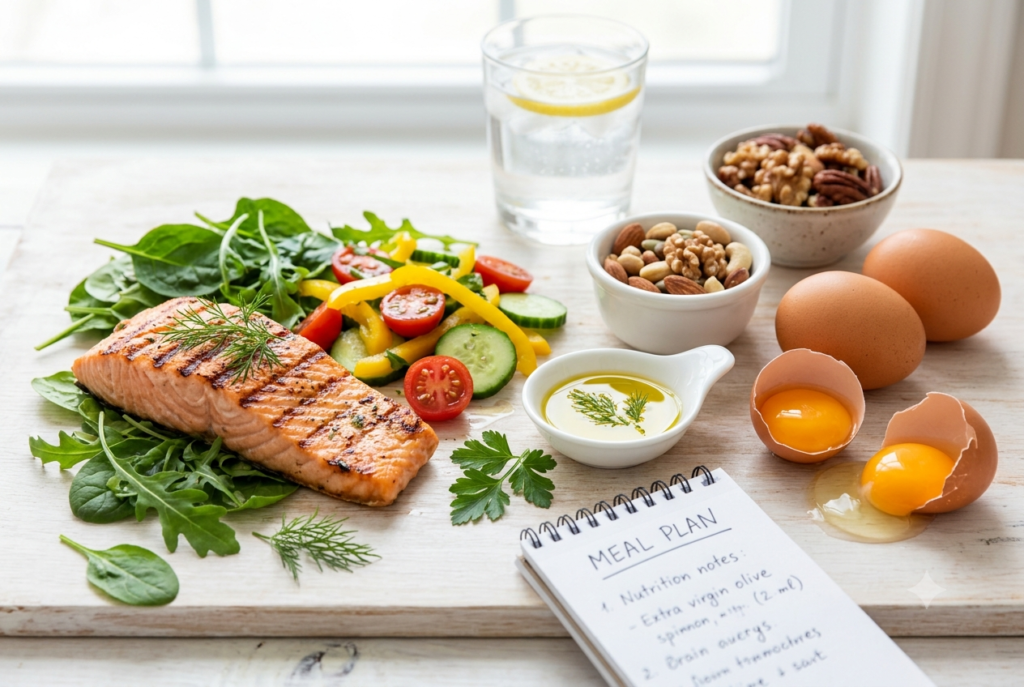
It’s not about eating less. It’s about eating smarter.
The foods that best control blood sugar share one characteristic: they cause a slow, gradual increase in glucose instead of an abrupt spike. This is called low glycemic index.
Lean Proteins (Your Best Friends)
Protein doesn’t raise blood sugar and keeps you full longer.
Best choices:
- Fish (salmon, sardines, tilapia) — rich in omega-3
- Chicken and turkey without skin
- Eggs (yolks are packed with nutrients)
- Plain Greek yogurt (unsweetened)
- Fresh cheese (in moderation)
- Legumes (beans, lentils, chickpeas) — protein + fiber
Practical tip: include a lean protein at each main meal. This stabilizes your blood sugar.
Vegetables (The More Colorful, The Better)
Vegetables have very few calories and almost no carbs that raise blood sugar.
Best options:
- Leafy greens (lettuce, spinach, kale)
- Broccoli, cauliflower, cabbage
- Carrots and squash (in moderation — contain more carbs)
- Tomato, cucumber, zucchini
- Bell peppers
- Onion and garlic (naturally regulate blood sugar)
Practical tip: fill half your plate with vegetables. This not only controls blood sugar — it also provides fiber, vitamins, and essential minerals.
Healthy Fats (Yes, You Need Them)
Fat doesn’t affect blood sugar and helps absorb vitamins.
The best ones:
- Extra virgin olive oil
- Avocado
- Nuts and almonds, walnuts
- Seeds (pumpkin, sunflower, flaxseed)
- Coconut oil (in moderation)
Avoid: trans fats (ultra-processed foods) and excessive saturated fat.
Complex Carbohydrates (Not All Carbs Are Evil)
You don’t need to eliminate carbs. Just choose the right ones.
Carbs that control blood sugar:
- Whole oat (not instant)
- Brown rice and quinoa
- Whole wheat bread (read the label — must have fiber)
- Sweet potato (with skin)
- Apple, pear, strawberry (fruits with low glycemic index)
Carbs you should avoid:
- White bread, white rice
- Refined sugar
- Cookies, cakes, candy
- Soda and sugary drinks
- Ultra-processed foods
Practical tip: choose carbs with fiber. Fiber slows down sugar absorption.
3. The Structure of the Perfect Meal for Diabetics
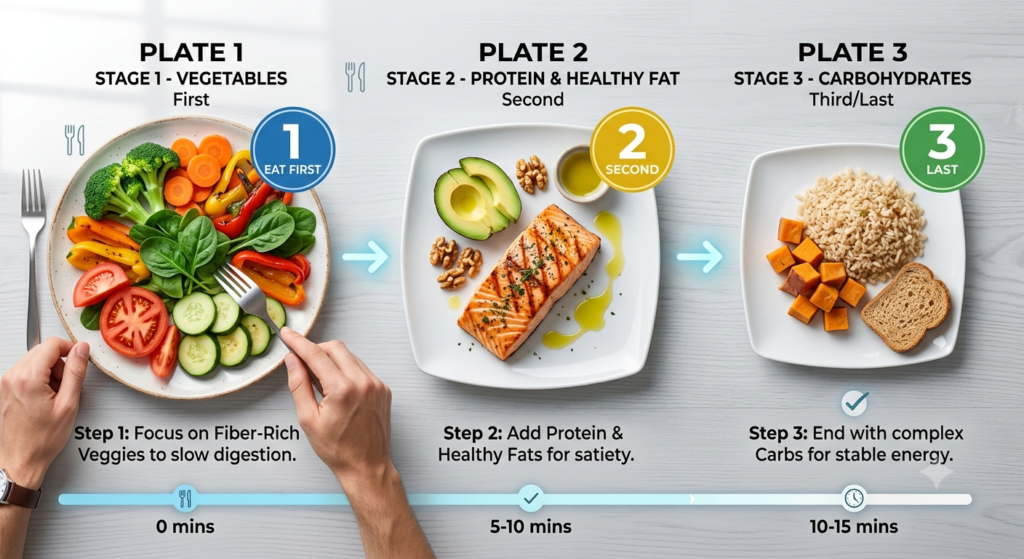
It’s not just what you eat — it’s also the order in which you eat it.
When you eat in a specific order, you can reduce blood sugar spikes by up to 30%. Here’s how:
The formula: Vegetables → Protein and Fat → Carbohydrates
Example of a practical meal:
- Start with vegetables (5 minutes): a large plate of salad or sautéed vegetables
- Then protein and fat (5 minutes): a fish fillet, an egg, a handful of nuts
- Finally, carbohydrates (last 5 minutes): a slice of whole wheat bread or half a cup of rice
Why does it work? Vegetables and protein fill your stomach with good things. When carbs arrive, they’re absorbed more slowly.
4. Common Mistakes That Sabotage Your Control
Many people do everything right — except for these small habits that ruin everything.
Mistake 1: Drinking Sugar
A glass of orange juice has as much sugar as a soft drink. A chocolate milk drink? Even worse.
Solution: Drink water, unsweetened tea, black coffee. If you want fruit, eat it (don’t drink it) — fiber helps.
Mistake 2: Skipping Breakfast
When you skip it, you eat too much at lunch and have bigger spikes.
Solution: a simple breakfast — egg + whole oats + coffee works.
Mistake 3: Random Snacks
A “diet” cookie here, a candy there. They add up to sugar.
Solution: planned snacks — a handful of nuts, Greek yogurt, an apple.
Mistake 4: Eating Too Much “Healthy Food”
Eating a lot of whole wheat bread is still eating a lot of carbs.
Solution: control portion sizes. One cup of brown rice, not three.
Mistake 5: Ignoring Labels
You don’t know how many carbs you’re eating if you don’t look at the label.
Solution: read labels in the first 30 days. After that, it becomes automatic.
5. A Simple Eating Plan to Start Today
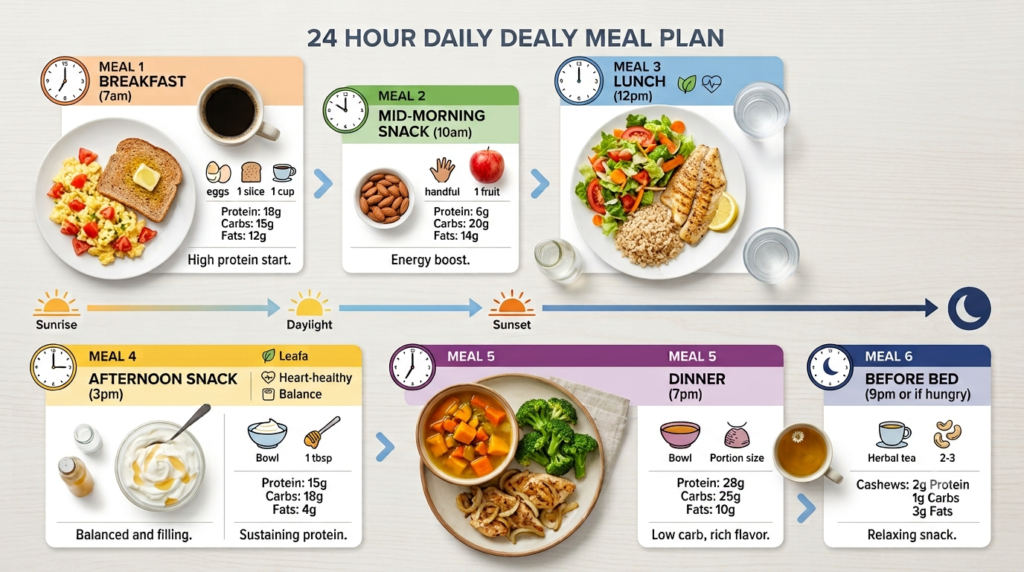
You don’t need a nutritionist (although having one is good). A simple plan works.
Typical Day:
Breakfast (7am):
- 2 scrambled eggs with tomato
- 1 slice of whole wheat bread with olive oil
- 1 cup of black coffee
Mid-Morning Snack (10am):
- 1 apple + 1 handful of almonds
Lunch (12pm):
- 1 large plate of salad (lettuce, tomato, carrot)
- 1 grilled fish fillet (size of your hand)
- ½ cup of brown rice
Afternoon Snack (3pm):
- 1 Greek yogurt
- 1 tablespoon of honey
Dinner (7pm):
- 1 plate of vegetable broth (sweet potato, carrot, squash)
- 1 chicken breast sautéed with onion
- Broccoli sautéed in olive oil
Before bed (if hungry):
- Tea with 2-3 cashews
Basic Numbers:
- Calories: about 1,800-2,200 per day
- Protein: one source at each meal
- Carbohydrates: choose the complex ones
- Water: at least 2 liters per day
6. Monitoring: How to Know If It’s Working
You need feedback. Without it, you’re driving blind.
Important Measurements:
Fasting Blood Sugar (check at home or lab)
- Normal: up to 100 mg/dL
- Pre-diabetes: 100-125 mg/dL
- Diabetes: above 126 mg/dL
Measure once a week at the same time (in the morning, before eating).
Hemoglobin A1C (lab test, every 3 months)
- Shows average blood sugar over the last 3 months
- Goal for diabetics: below 7%
Weight and Waist
- Weigh yourself once a week
- Measure your waist once a month
How You Feel
- Do you have more energy?
- Do you sleep better?
- Do wounds heal faster?
These signs count just as much as the numbers.
Frequently Asked Questions
Q: Can I eat fruit if I have diabetes? A: Yes! Choose fruits with low glycemic index: apple, pear, strawberry, watermelon. Avoid mango, grapes, and very ripe banana. And eat it, don’t drink it.
Q: How long does it take to see results? A: Some people see changes in 2 weeks (more energy). Blood sugar results: 4-6 weeks. Weight loss: 8-12 weeks.
Q: Do I need a nutritionist? A: A nutritionist is great if you can afford one (helps personalize). But this guide already puts you 80% of the way there.
Q: Can I eat foods I love if they have sugar? A: Yes, occasionally — in small portions combined with protein/fat. A small dessert after a balanced meal causes less spike than alone.
Q: What if I can’t follow everything? A: Start with one thing. Change the sugar in your drinks to tea. Then increase vegetables. Then switch the rice. Small changes become habits.
Conclusion
Controlling diabetes through nutrition is simple — not easy, but simple.
You don’t need exotic foods, complicated calculations, or monastery-level discipline. You need a clear plan (like the one you saw here), consistency (not perfection), and feedback (monitoring your blood sugar).
Your next step: choose one change from this guide. It could be replacing juice with water, starting to track what you eat, or buying a blood sugar meter. Make that change for a week and see how you feel.
Then come back and choose the next one. That way, in a few weeks, you’ll have an eating plan that controls your diabetes without making you feel deprived.
Your health isn’t about being perfect. It’s about being consistent.