
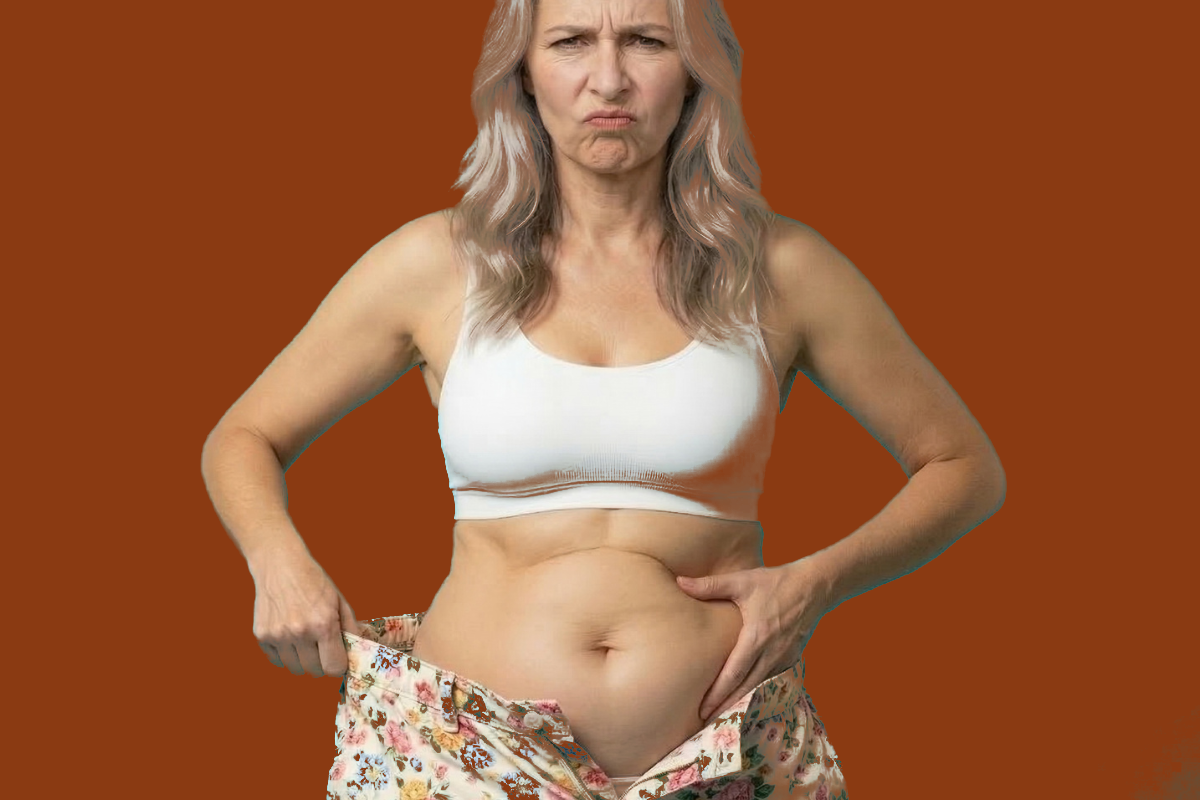
Learn how to manage and prevent weight gain during menopause. Complete guide with scientific strategies, nutrition, and exercise to maintain your weight.
Introduction
Menopause is not a disease. But it is a transition that changes everything in your body — especially when it comes to weight.
You’ve probably heard it before: “Women automatically gain weight during menopause”. That’s a dangerous half-truth. Yes, gaining weight during menopause is common. But it’s not inevitable.
The reality is that hormonal changes during menopause make it harder to maintain your weight — not impossible. Your metabolism slows down, you feel hungrier, you lose muscle mass, and sleep becomes complicated. But when you understand why this happens, you can do something about it.
In this guide, we’ll explore the science behind weight gain in menopause, identify the factors working against you, and create a practical plan to maintain (or recover) your ideal weight — without restrictive diets or extreme sacrifices.
1. Why Women Gain Weight During Menopause
Before talking about solutions, you need to understand the problem.
During your reproductive years, estrogen and progesterone regulate much more than just menstrual cycles. These hormones affect:
- How your body stores fat (more in the belly during menopause)
- How much energy you burn at rest (basal metabolism)
- How much you eat (appetite and satiety)
- How well you sleep (sleep quality)
When you enter menopause, estrogen levels drop dramatically. Result? Your entire body changes.
What Changes in Your Metabolism
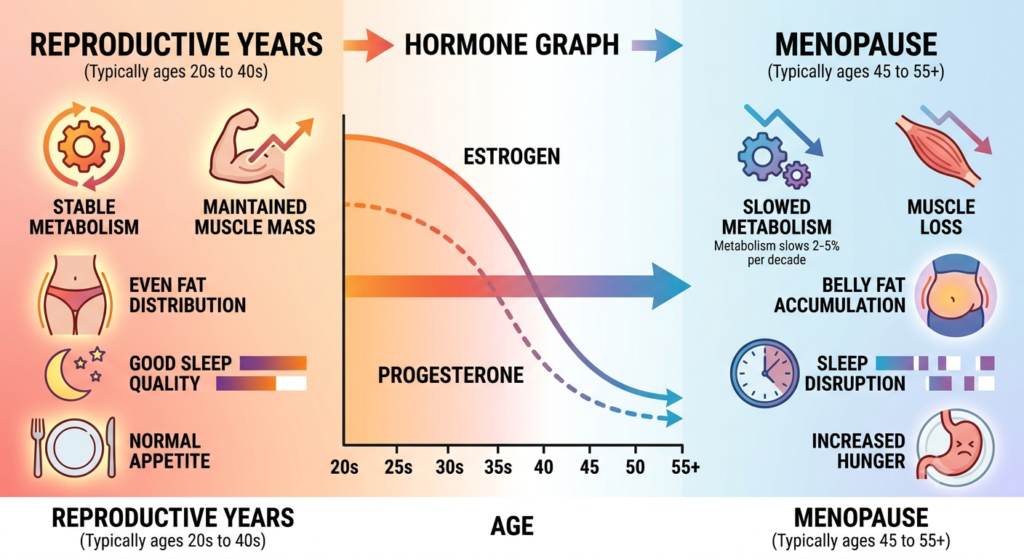
The drop in estrogen causes:
- Slower Metabolism Studies show that women’s metabolism slows by about 2-5% every decade after age 30. During menopause, this accelerates. You burn fewer calories simply by existing.
- Loss of Muscle Mass Without estrogen (and with lower testosterone production), you lose muscle more easily. Muscle burns calories. Fat doesn’t. Result: you gain weight even eating the same amount.
- Fat Distribution Changes During reproductive years, estrogen “prefers” to store fat on thighs and hips. During menopause, it shifts to the belly. This visceral fat is more dangerous for your health.
- Hunger Increases, Satiety Decreases Estrogen affects leptin (the satiety hormone) and ghrelin (the hunger hormone). Without estrogen, you feel hungrier and get satisfied less easily.
- Sleep Gets Worse Without progesterone (which helps with sleep), insomnia becomes common. Poor sleep increases cortisol (the stress hormone) which promotes weight gain.
Real Numbers
- Women gain on average 2-3 kg during the menopausal transition (perimenopause to 5-10 years after)
- Without intervention, half gain more than 5 kg
- Belly fat increases even without total weight gain
- All of this without women eating more
The conclusion: it’s not lack of discipline. It’s biology.
2. The Eating Changes That Actually Work
You can’t fight hormones. But you can work with them.
The secret isn’t eating less. It’s eating differently.
Protein: Your Greatest Ally
Protein is the secret weapon against weight gain in menopause. Why?
- Preserves muscle mass — your defense against slow metabolism
- Increases satiety — you eat less without trying
- Requires more energy to digest — burns 20-30% of protein calories in digestion
- Stabilizes blood sugar — avoids energy spikes and crashes (which trigger hunger)
How much to eat? During menopause, you need more protein than before. Goal: 1.2 to 1.6g per kg of body weight.
Example: if you weigh 60kg, you should eat 72-96g of protein per day.
Best sources:
- Fish (salmon, sardines — rich in omega-3 that reduces inflammation)
- Chicken and turkey
- Eggs (yolks contain choline, which helps metabolism)
- Greek yogurt (unsweetened)
- Lean cheese
- Legumes (lentils, beans — protein + fiber)
Practical tip: include a protein at each meal. Breakfast with eggs, lunch with fish, snack with Greek yogurt.
Healthy Fats: They’re Not Enemies
In menopause, healthy fats are essential. They help absorb vitamins (A, D, E, K) that your body desperately needs during this phase.
The best ones:
- Extra virgin olive oil (reduces inflammation)
- Avocado (contains potassium, which regulates water in your body)
- Nuts and almonds (satiety + nutrients)
- Seeds (pumpkin, sunflower, flaxseed — omega-3)
- Coconut oil (in moderation)
How much? 1-2 tablespoons per meal.
Complex Carbohydrates: Choose Wisely
You don’t need to eliminate carbs. Just choose well.
Carbs that help:
- Whole oats (not instant) — reduces inflammation
- Brown rice and quinoa — keeps you full
- Sweet potato (with skin) — fiber + nutrients
- Whole wheat bread (read the label — must have fiber)
- Fruits (apple, pear, strawberry)
Carbs that hurt:
- Refined sugar
- White bread and white rice
- Ultra-processed foods
Tip: carbs with fiber = slow absorption = no blood sugar spikes = less hunger.
Fiber: The Invisible Tool That Works
Fiber doesn’t just help digestion — it helps you maintain weight.
Fiber increases satiety without adding significant calories. Women in menopause should eat 25-30g per day (most eat 10-15g).
Sources:
- Vegetables (especially leafy greens)
- Fruits (with skin when possible)
- Legumes (beans, lentils)
- Seeds and nuts
- Whole grain foods
3. Exercise: The Tool Nobody Mentions
Here’s the secret that menopausal women don’t want to hear: diet alone isn’t enough.
You need exercise. Especially two types.
Strength Training
This is your defense against slow metabolism and muscle loss.
When you do strength training:
- Build/maintain muscle mass (which burns calories)
- Increase basal metabolism (burn more at rest)
- Improve insulin sensitivity
- Increase bone density (protection against osteoporosis, common in menopause)
How often per week? 2-3 sessions.
What to do?
- Free weights (dumbbells)
- Weight machines
- Bodyweight training (push-ups, squats, planks)
You don’t need to be heavy or complex. 30 minutes, 3 times a week works.
Moderate Cardio
You don’t need to run a marathon. Brisk walking, swimming, cycling — all work.
How often? 150 minutes of moderate activity per week (or 75 vigorous).
Broken down: 30 minutes, 5 days a week. Simple.
Why Exercise Works Better in Menopause
Unlike before, in menopause, exercise isn’t optional. It’s essential. Because:
- Your metabolism needs stimulation
- You lose muscle mass more easily (strength training compensates)
- Sleep improves with regular exercise
- Stress/cortisol decreases
Studies show women who combine strength training + cardio gain much less weight during menopause than sedentary women.
4. Sleep and Stress: The Silent Killers
You can do everything right — nutrition, exercise — and still gain weight. Why? Poor sleep.
During menopause, hot flashes wake you up 5+ times per night. Result: fragmented sleep.
Why Poor Sleep = Weight Gain
Without good sleep:
- Cortisol (the stress hormone) stays elevated
- Elevated cortisol = store fat (especially belly)
- Ghrelin (hunger) increases
- Leptin (satiety) decreases
- You crave sugar/carbs (your body seeks energy)
Sleeping little = eating more + burning less.
What to Do
To sleep better during menopause:
- Cool bedroom (60-68°F / 16-19°C) — helps with hot flashes
- No screens 1 hour before bed
- Natural melatonin (foods like cherries, yogurt’s tryptophan)
- Magnesium (reduces muscle tension, helps sleep)
- Exercise (but not late at night)
- Controlled breathing before bed (4-7-8: inhale 4, hold 7, exhale 8)
Talk to your doctor about:
- HRT (Hormone Replacement Therapy) — helps significantly with hot flashes
- Medications (like SSRIs) — help sleep
Good sleep = your whole body changes. Seriously.
5. A Practical Plan to Start Today
You don’t need perfection. You need consistency.
Week 1-2: Assessment
- Eat normally, but write down everything you consume (app like MyFitnessPal or paper)
- Sleep as best you can (assess your pattern)
- Measure: weight, waist, how you feel
Goal: understand where you are.
Week 3-4: Small Changes
- Increase protein (add an egg, yogurt, fish)
- Increase vegetables (half a cup more per day)
- Start exercise (30 min walk, 3x a week)
- Improve sleep (cool room, no screens at night)
Don’t change everything. Change one thing.
Week 5-8: Refinement
- Reduce refined carbs (replace with whole grains)
- Increase fiber (add seeds, fruits)
- Add strength training (2x a week)
- Monitor weight/waist (1x a week)
Month 3: Evaluate Progress
- How much did you lose? (it’s not just weight — waist matters)
- How do you feel? (energy, sleep, hunger?)
- Which changes became easy?
- Which are still difficult?
Then adjust.
Example Day
Breakfast (7am):
- 2 scrambled eggs with spinach
- 1 slice whole wheat bread
- 1 black coffee
Mid-Morning Snack (10am):
- Greek yogurt + 1 tablespoon honey + 1 handful almonds
Lunch (12pm):
- Large salad (lettuce, tomato, carrot, squash)
- Salmon fillet (size of your hand)
- ½ cup brown rice
Afternoon Snack (3pm):
- 1 apple + 1 tablespoon peanut butter
Dinner (7pm):
- Chicken breast sautéed with onion/garlic
- Broccoli with olive oil
- Small sweet potato
Before bed:
- Chamomile tea (helps sleep)
6. When to Ask for Professional Help
Sometimes it’s not just diet and exercise.
Talk to your doctor if:
- You’re in perimenopause (transition before menopause) with severe hot flashes — HRT might help
- You have hypothyroidism (common in menopause, drastically slows metabolism)
- You’re depressed (hormones affect mental health, which affects weight)
- You have insulin resistance or pre-diabetes
- You’re taking medications that cause weight gain (discuss alternatives)
A nutritionist specialized in menopause is also well worth it.
Frequently Asked Questions
Q: How long until I see results? A: Energy and sleep improve in 2-3 weeks. Weight loss: 4-8 weeks (depends how much you need to lose). Changes in body composition (less fat, more muscle): 8-12 weeks.
Q: Can I lose weight quickly during menopause? A: Very restrictive diets cause muscle loss (worse during menopause). Better: 0.5-1 kg per week. Slow, but sustainable.
Q: What if I’m on HRT (Hormone Replacement Therapy)? A: HRT helps significantly with symptoms. It can stabilize weight (doesn’t cause automatic gain, as many believe). Continue with nutrition and exercise.
Q: Do I need a specific diet (keto, low-carb)? A: There’s no “best” diet. What matters is:
- Enough protein
- Enough fiber
- Consistency (not perfection) Choose something you can maintain.
Q: What if I can’t lose weight even doing everything right? A: Talk to your doctor about:
- Insulin levels (insulin resistance is common)
- Thyroid (hypothyroidism slows metabolism)
- Cortisol (chronic stress causes belly weight)
- Medications you take
Sometimes your body needs professional help.
Q: Can I eat foods I love? A: Yes. 80% healthy eating, 20% flexibility works better than 100% restrictive that you can’t maintain.
Conclusion
Gaining weight during menopause isn’t weakness. It’s biology.
But biology isn’t destiny. You can manage your weight during menopause — it won’t be as easy as before, but it’s completely possible.
The formula is simple:
- Adequate protein (preserves muscle)
- Regular exercise (especially strength training)
- Good sleep (reduces cortisol and hunger)
- Consistency (not perfection)
It’s not glamorous. It’s not fast. But it works.
Your next step: choose one thing from this guide. It could be increasing protein, starting a walking routine, or improving sleep. Do it for 2 weeks and see how you feel.
Then choose the next one.
Menopause is a transition — not a sentence. And you have much more control than you think.